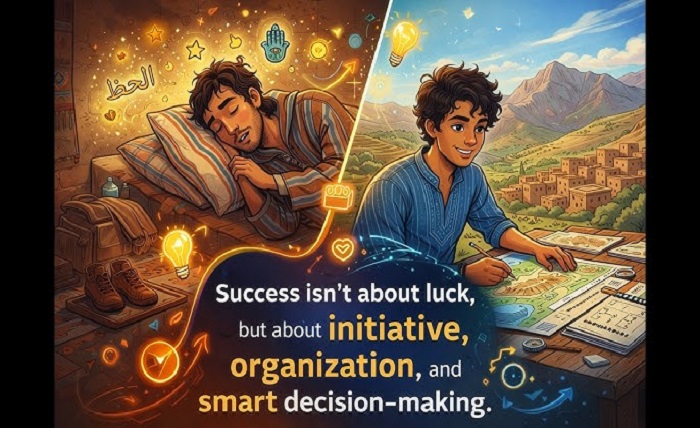
Why People Confuse Luck With Good Judgment
People often praise luck when they should study the decision.
A man crosses a river on a weak bridge and reaches the other side. Others call him lucky. They are right, but only partly. If he crossed because he checked the ropes, tested the planks, and moved with care, then luck was not the whole story. Wisdom was already at work.
This confusion appears in daily life. Someone starts a business at the right time. Someone buys land before prices rise. Someone refuses a quick reward and gains a larger one later. From the outside, these outcomes can look like chance. From the inside, they often come from observation, patience, and timing.
Stories help us see this difference. A good moral story does not only show what happened. It shows why it happened. It points to the quiet choice before the visible result. That choice matters more than people think.
Luck is real. Storms pass. Markets shift. A stranger arrives at the right moment. But wisdom changes how a person meets these events. It is the difference between walking into rain without a roof and carrying an umbrella because the sky already warned you.
This is why stories about risk and chance stay useful. They teach that not every gain is earned, but many losses are invited. They also teach that smart decisions do not remove uncertainty. They simply improve the odds.
In the sections that follow, the stories will not treat luck as magic. They will treat it as weather. Sometimes it helps. Sometimes it harms. Wisdom is the hand that checks the road before taking the next step.
The Farmer And The Two Seeds: A Story Of Patience Over Chance
A farmer stood at the edge of his field with two seeds in his hand.
The first seed was bright and smooth. A trader in the nearby town had praised it. “This one grows fast,” he said. “You will see results in days.” The second seed looked plain. No shine. No promise of speed.
The farmer walked through the village that evening. At the square, people gathered around games and noise. Some chased quick wins, like players at a desi casino, drawn by the thrill of fast results. The farmer watched but did not join. He returned home and placed both seeds on the table.
In the morning, he chose the plain seed.
He prepared the soil with care. Cleared stones. Checked moisture. Waited for the right light. Then he planted it. Days passed. Nothing showed. Neighbors laughed. “You chose the wrong one,” they said. “You should have picked the fast seed.”
The farmer said little. He kept watering. He checked the ground each morning. After some time, a small shoot appeared. It grew slowly, but its roots went deep. Weeks later, the plant stood strong. It held through wind. It held through dry days. It produced steady fruit.
Another farmer nearby had chosen the bright seed. His field turned green fast. For a short time, it looked better. Then the heat came. The roots were shallow. The plants weakened. The field lost strength as quickly as it had gained it.
The difference was not luck. Both farmers had the same weather. The same soil. The same chance. The difference was the choice before the result.
The first farmer did not chase speed. He chose structure over appearance. He chose a slower path with deeper support. His result lasted because his decision respected time, not excitement.
This story does not reject chance. Rain may still fail. Storms may still come. But it shows that wise choices build a base that can survive what luck brings.
The Merchant And The Coin: A Story Of Risk Without Thought
A merchant found a coin on the road. It was old, heavy, and marked with a rare seal. He took it to the market.
A buyer offered a fair price. “Sell it now,” the buyer said. “It is worth this much today.” The merchant hesitated. Another man stepped in. “Do not sell,” he said. “Keep it. The value may rise. You could gain twice as much.”
The merchant liked the sound of that. He imagined a higher price. He imagined praise from others. He refused the first offer.
Days passed. He carried the coin from shop to shop. Each buyer offered less than the first. The market had shifted. Interest had faded. By the end of the week, the best offer was half of what he had once refused.
He returned to the first buyer, but the buyer had already moved on.
The loss did not come from bad luck. It came from a choice made without clear ground. The merchant did not ask what the coin was worth in a stable sense. He did not check demand. He did not test the market early. He chose based on hope of gain, not on evidence.
This is how risk turns costly. Not because risk exists, but because it is taken without structure. A fair offer becomes a missed chance. A simple decision becomes a slow loss.
The lesson sits in the moment of choice. When a result is uncertain, the mind can drift toward the best possible outcome and ignore the likely one. Wisdom pulls it back. It asks what is known, what can be tested, and what can be secured now.
The merchant learned too late. The coin did not change. The market did. His decision failed to respect that movement.
The Traveler And The Forked Road: A Story Of Timing And Clarity
A traveler reached a fork in the road at dusk.
The left path was wide and smooth. It led through open land. A sign pointed forward, but the letters were faded. The right path was narrow. It cut through trees. A small marker showed fresh paint.
Two other travelers stood nearby. One chose the wide road at once. “It looks easy,” he said. The second hesitated, then followed. The first traveler remained still.
He looked at the ground. The wide road showed many old tracks, but none were fresh. Dust had settled. The narrow path showed recent marks. The soil was pressed. Leaves were pushed aside.
He checked the sky. Clouds moved in. Light was fading. A long open road would leave him exposed after dark. The narrow path offered cover.
He chose the narrow path.
The wide road led to a dry stretch with no shelter. The two travelers who chose it had to stop in the open when night fell. The narrow path led through trees to a small village. The traveler reached it before the rain.
The difference was not luck. All three saw the same paths. Only one read the signs.
Timing shaped the outcome. The same wide road might be safe at noon. At dusk, it carried risk. The same narrow path might feel uncertain in bright light. In fading light, it offered protection.
Clarity came from simple checks. Fresh tracks. Weather. Distance. These are small details, but they change decisions.
This story shows that good choices do not require perfect knowledge. They require attention to what is visible now. The traveler did not predict the future. He read the present and acted in time.
Wise Decisions Improve Odds, Even When Luck Stays Uncertain
Luck will always remain part of life. Weather changes. Markets shift. People act in ways no one can fully predict.
These stories show a steady pattern. Outcomes improve when choices rest on clear observation, timing, and restraint. They worsen when choices follow speed, hope, or noise.
The farmer chose depth over shine. The merchant chose hope over proof and paid the cost. The traveler chose attention over ease and reached safety. Each result followed a decision made before the outcome appeared.
Wisdom does not remove risk. It shapes how a person meets it. It turns blind moves into measured steps. It raises the chance of a good result without promising it.
In the end, the question is not whether luck exists. It does. The question is how a person prepares for it.